
Epilogue
A poem by Tomas Tranströmer translated from Swedish by Daniel Carden Nemo

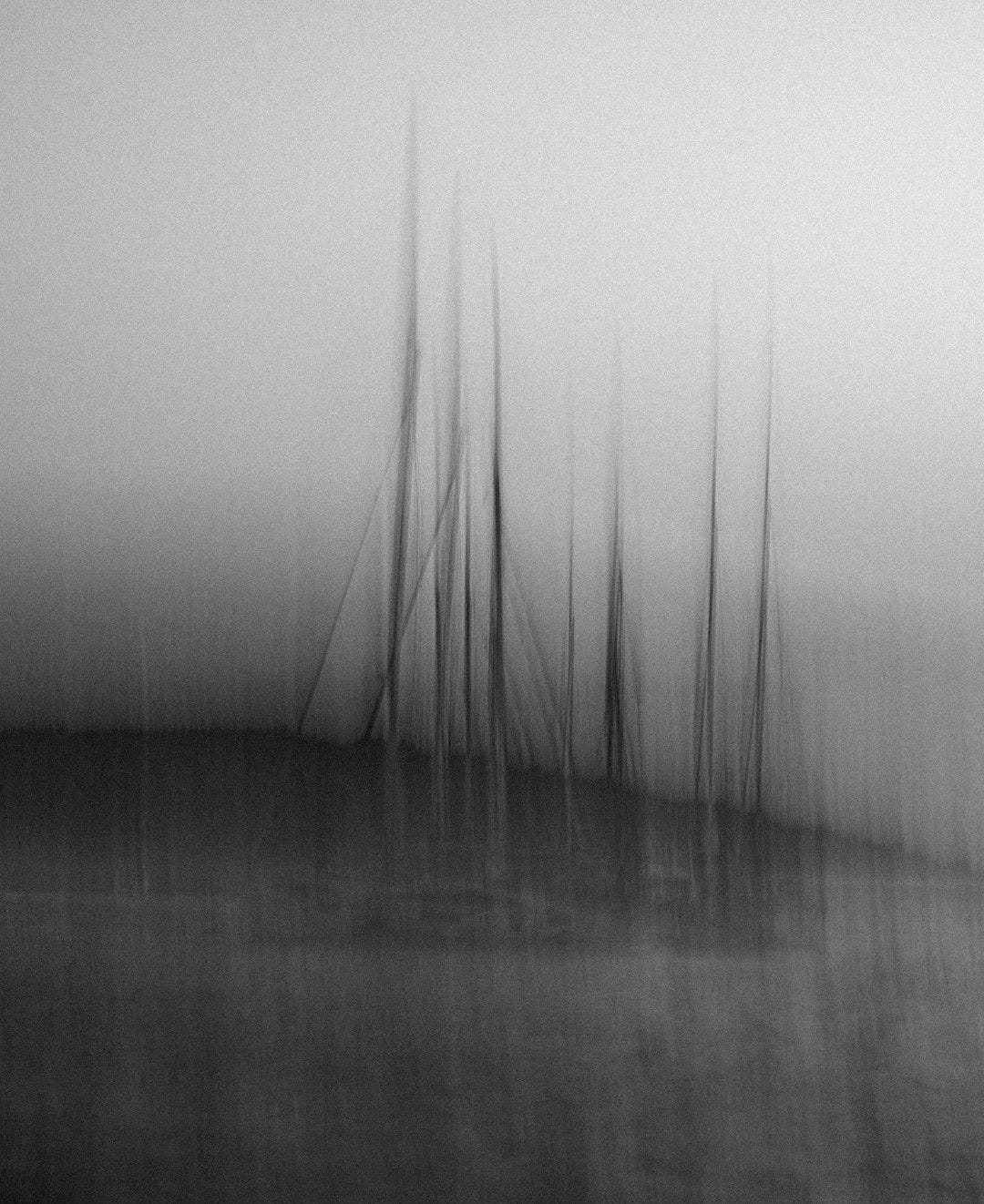
December. Sweden is a hauled-up,
unrigged ship. Its masts stand sharp
against the twilight sky. And twilight lasts longer
than day—the road that leads here is rocky:
first light doesn’t arrive till noon
when winter’s colosseum rises,
lit up by surreal clouds. Then all at once
the white smoke lifts dizzily
from the villages. The clouds, high and unending.
The sea grubs at the sky-tree’s roots,
distracted, as if listening for something.
(Across the soul’s dark, averted half,
a bird travels unseen, waking
the sleepers with its cries. The telescope
turns away, caught in another time,
and it is summer: the mountains bellow, bursting
with light, and the stream holds the sun’s shimmer
with a seethrough hand… All of it gone
as when a filmstrip snaps in the dark.)
Now the evening star burns through the cloud.
Trees, fences, houses expand
in the soundless avalanche of darkness.
And under the star more and more develops
of the other hidden landscape that leads
a life of contours on the night’s X-ray plate.
A shadow pulls its sled between the houses.
And they wait.
At six o’clock, the wind picks up
and crashes with a roar down the village street,
in the dark, like a band of horsemen. How
the black unrest plays about and fades!
The houses trapped in a motionless dance,
in a dreamlike noise. Gust
after gust flits across the bay
toward the open sea’s deep dive into darkness.
Up in space the stars flash signals of distress.
They’re switched on and off by clouds rushing along,
only revealing their existence when
they obscure the light, like clouds from the past
roaming through souls. When I walk by
the stable wall, I hear the sick horse
stamping inside over the roar.
And that’s the storm departing,
by a broken gate that slams and slams, a lantern
swinging from a hand, a scared animal
shrieking on the mountain. The storm rumbles
like thunder over cowsheds, growls
in the telephone wires, whistles shrill
in the roof tiles of the night ceiling,
the tree helplessly flings its branches.
A bagpipe note breaks loose!
A note from a bagpipe liberated, marching
forward. A procession. A forest on the move!
Torrents surge around a prow and darkness
stirs, land and water travel on. And the dead,
who have gone belowdecks, are here with us,
underway: a sea-voyage, a passage
that is not pursuit but shelter.
And the world’s forever tearing down its tent
anew. On a summer day the wind
catches the oak’s rigging and hurls the Earth forward.
The water lily paddles with its hidden webfoot
in the pond’s fleeing dark embrace.
A glacial boulder rolls away through space.
In the summer dusk, islands seem to lift
from the horizon. Old villages
are on the move, drawn deeper into the woods
on the magpie-creaking wheel of seasons.
When the year kicks off its boots,
and the sun climbs higher, the trees leaf out
and fill with wind and sail ahead in freedom.
At the mountain’s foot, the breaking surf of evergreens,
but summer’s long, warm sea swell is coming,
slowly combing through the treetops, resting
a moment and slipping back again—
leaving the bare coast behind. And at last:
God’s spirit is like the Nile: overflows
and sinks in a rhythm reckoned
in texts throughout the ages.
But He is also unchanging
and therefore seldom observed here.
He crosses the procession from the side.
Like a ship passing through the fog
without the fog noticing a thing. Silence.
The lantern’s faint glow is the signal.
“Epilog” is a cosmology of continual reassembly, a system of closure rather than mere closing statement. At the beginning, the country is a ship removed from its element, rendered skeletal and, similarly, temporality is hauled up, pitched into a long suspension. “Twilight lasts longer / than day.” Here, even clouds belong to a perception out of joint with ordinary daylight, “infinitely high,” and below them the sea “grubs at the sky-tree’s roots.” In Swedish, bökar is the rummaging of animals with the snout, a disorder-making search, so to speak, and the English translation “grubs” catches the earthy labor of it.
Tranströmer presents an interior study of the landscape, contour-life, bone-life. He plants a darkroom in the night. “The evening star burns through the cloud” and “the other hidden landscape” is “developing” on the night’s X‑ray plate. In the light, the other landscape, the unconscious, becomes visible, the avalanche is silent, but it is also plunging (störtande), a fall whose speed is actually felt. But, instead of shrinking the visible world, darkness swells it, and Tranströmer asks us to feel our way into the sensorium where it happens. There is a sudden, collective approach in darkness felt as embodied terror. “The black unrest” “plays about and fades.” The houses stand fixed in a dance of immobility that represents a precise depiction of anxiety states: the body flooded with motion-signals while the person remains stuck.
The image in the line “the dead, / who have gone belowdecks, are here with us” is not only a metaphysical claim but a structural one. Tranströmer builds a layered ship-world in which different temporalities coexist. His famous remark that poems are “meeting places” becomes more than just an aphorism here, the meeting is literalized, land and water, the dead and the living all travel, winter and summer coincide via the refractor’s turn. Nonetheless, the summer is not a respite from winter. It is another register of the same underlying condition: everything is in transit. “God’s spirit is like the Nile: overflows / and sinks in a rhythm reckoned / in texts throughout the ages.” The spirit is periodic overflow that can be reckoned.
But God is also “unchanging / and therefore seldom observed here.” If God is overflowing and sinking, as if in a rhythm, why “seldom observed”? If unchanging, how come there’s a rhythm? “He crosses the procession from the side.” This is not the God of frontal revelation. It is a God who arrives obliquely, like a ship passing through fog “without the fog noticing a thing.” We began with Sweden as ship hauled up on land, and we end with a ship moving through fog, unnoticed. In between, we are asked whether perception can notice the most consequential crossings at all. “Silence,” the poem says. Then: “The lantern’s faint glow is the signal.” In the end, light doesn’t illuminate the fog; divine passage leaves no spectacle whatsoever, only a faint lantern-glow as signal.
How he describes mystery, God, Sweden, all interwoven. Your explanation is excellent too.